Custom Precision Mold Components for Medical and Packaging Tooling
A medical consumable, bottle cap, closure, or packaging component may look simple from the outside, but the mold components behind it often control the most important production risks.
A small core pin can determine an internal diameter. A thread core can influence closure torque and leakage performance. A cavity insert can decide whether multiple cavities produce parts that look, fit, and seal the same after hundreds of thousands of cycles.
For global buyers sourcing mold components from China, the real question is not only whether a supplier can machine steel parts. The better question is whether the supplier can support stable production through material selection, machining route, inspection evidence, and controlled replacement-part logic.
At SENLAN, we manufacture custom precision mold components for medical, cap, closure, cosmetic packaging, refill packaging, and other injection molding applications where fit, sealing, cavity consistency, and long-term production stability matter.
Quick Answer: SENLAN manufactures custom precision mold components for medical, cap, closure, and packaging molds, including mold inserts, core pins, cavity inserts, thread cores, sleeves, neck rings, and replaceable tooling parts. For buyers in Europe, North America, South America, Southeast Asia, and the Middle East, our focus is not only machining components, but helping molds stay stable, measurable, replaceable, and production-ready.
Why Global Buyers Treat Mold Components as Production Controls
Precision mold components should not be evaluated as ordinary machined parts. In medical and packaging tooling, these components often control the functional areas of the molded product.
For example:
- A core pin may control a small bore in a diagnostic consumable.
- A cavity insert may control cosmetic surface quality and cavity-to-cavity consistency.
- A thread core may control cap torque, sealing contact, and opening behavior.
- A sleeve or neck ring may affect release stability and fit with a mating part.
- A replacement insert may determine whether a mold can return to production quickly after wear or damage.
This is why medical and packaging mold buyers should review precision mold components around the product features they control, not only around the component name on a drawing.
What Are Precision Mold Components?
Precision mold components are the custom parts inside an injection mold that form, guide, eject, seal, or actuate the molding process. They may include:
- cavity inserts
- core inserts
- core pins
- sleeves
- thread cores
- neck rings
- sliders and lifters
- ejector-related components
- replaceable inserts
- fit-critical tooling parts
The important point is not the part name. It is the function that part controls. If a component wears, shifts, bends, loses surface quality, or fails to match the intended datum relationship, the molded product can change with it.
Why Inserts Are Used Instead of Machining Everything Into One Core
A monolithic mold core may seem simpler, but it is not always the best production choice. Inserts allow the tooling team to separate high-risk features from the larger mold structure.
A well-designed insert can help with:
- Feature control: isolating a sealing land, thread, rib, logo, bore, or cosmetic detail.
- Maintenance: replacing a worn or damaged area without rebuilding the entire core or cavity block.
- Revision management: modifying one product feature while keeping the mold platform unchanged.
- Venting and polishing access: making deep or difficult areas easier to finish and maintain.
- Spare-part planning: preparing matched replacement components for production-critical molds.
However, inserts are not automatically better everywhere. Every additional interface must be designed correctly. Poor insert fit can create flash, witness lines, alignment problems, weak cooling performance, or unexpected maintenance work.
The engineering question is not simply, "Should this mold use inserts?" The better question is, "Which product features justify a controlled insert, and how will that insert be inspected, replaced, and maintained?"
Core Pins, Cavity Inserts and Thread Cores: What Risks They Control
Different mold components control different production risks. This functional view is especially useful in multi-cavity medical and packaging molds because it helps the tooling team trace a defect back to the component that forms the affected feature.
| Component | Typical Function | Production Risk if Unstable |
|---|---|---|
| Core Pin | Forms small bores, inner profiles, or fine cylindrical features | Dimensional drift, bending, poor concentricity, uneven wall thickness |
| Cavity or Core Insert | Forms primary product geometry and visible surfaces | Cavity variation, flash, cosmetic defects, or replacement mismatch |
| Thread Core or Neck Ring | Forms closure threads and neck interface | Torque variation, poor sealing, difficult release, or leakage risk |
| Slider or Lifter | Forms undercuts or side features | Wear, sticking, burrs, mismatch, or ejection damage |
| Replaceable Insert | Controls wear-prone or changeable product features | Downtime, re-fitting work, flash, or inconsistent restart after maintenance |
Choosing the Right Machining Route: CNC, Wire EDM, EDM and Grinding
No single machining method is ideal for every mold component. Geometry, steel condition, hardness, surface requirement, tolerance target, and inspection method should determine the process route.
In many precision mold components, CNC machining, EDM, Wire EDM, grinding, polishing, and inspection work together rather than competing with each other.
CNC Machining for Material Removal and 3D Geometry
CNC milling and turning are practical choices for shaping cores, round pins, sleeves, cavity blanks, and components with accessible three-dimensional geometry. CNC machining also helps establish reliable datums for later finishing operations.
Wire EDM for Hardened Steel Profiles and Fine Features
Wire EDM is useful for conductive hardened steels, fine profiles, narrow slots, insert outlines, slider details, and delicate features where mechanical cutting force may cause deflection.
For slender or intricate mold components, low-force machining can help reduce deformation risk. Multiple skim passes can also support better dimensional accuracy and surface quality when the component geometry requires it.
Sinker EDM for Cavities, Ribs and Non-Through Features
Some details cannot be made by passing a wire through the workpiece. Deep ribs, blind forms, textured cavity details, and complex non-through shapes may require sinker EDM with a shaped electrode.
For buyers, the supplier should be able to explain why the selected machining route is suitable for the material, hardness, geometry, finish, and inspection target. For broader tooling context, buyers can also review SENLAN’s plastic injection molding tooling support.
Engineering Evidence Buyers Should Check Before Ordering Mold Components
For overseas buyers, engineering evidence is more valuable than verbal claims. Before ordering custom mold inserts, core pins, thread cores, or replacement components, buyers should confirm how the supplier controls material, machining, inspection, and interchangeability.
| Buyer Concern | What to Check | Why It Matters |
|---|---|---|
| Material Reliability | S136, SKD61, H13, Stavax, M340, or customer-specified steel with controlled heat treatment | Material selection affects wear resistance, polishing, corrosion resistance, and mold life. |
| Critical Tolerance | CTQ dimensions, datum control, and measurement method | Core pins, cavity inserts, and thread cores directly affect sealing, fit, and cavity consistency. |
| Machining Route | CNC, EDM, Wire EDM, grinding, polishing, and process sequence | The correct route reduces deformation, improves finish, and supports repeatable production. |
| Inspection Evidence | ZEISS CMM report, dimensional report, hardness test, and surface finish check | Buyers need measurable proof before assembly, validation, or replacement use. |
| Replacement Logic | Controlled drawings, spare-part list, and interchangeable insert strategy | Replacement parts should restore mold performance without repeated manual fitting. |
SENLAN’s precision machining and ZEISS CMM inspection capabilities help support measurable control for fit-critical mold components used in medical, cap, closure, and packaging molds.
Medical Mold Components: From CTQ Control to Validation-Ready Production
Medical molding raises the stakes because an acceptable first sample is not enough. The process must be capable of producing conforming products under documented and repeatable production conditions.
While the molding manufacturer and quality organization own the full validation program, mold-component decisions can either support that effort or make it harder.
For medical mold components, buyers should ask:
- Which dimensions are critical to quality?
- How are cavity inserts, pins, sleeves, or cores inspected?
- Can replacement parts be traced to controlled drawings and measurement records?
- Will a replacement insert reproduce the same fit without unplanned bench correction?
- What material, hardness, surface finish, and inspection records are required?
This does not mean a mold-component supplier performs the customer’s IQ/OQ/PQ validation. It means the supplier can help the customer enter validation with components that have defined requirements, controlled manufacturing, and clear inspection evidence.
Packaging Mold Components: Threads, Sealing and Cavity Consistency
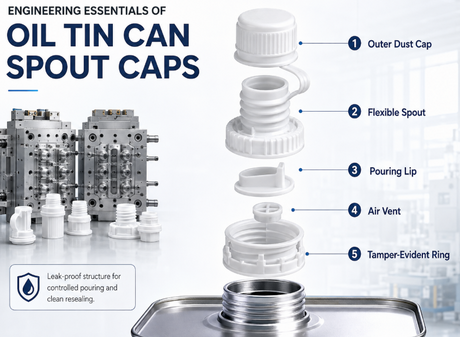
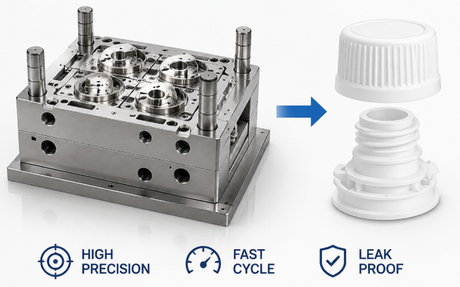
Caps, closures, refill fitments, and cosmetic packaging parts are high-volume products with both visible and functional demands. A consumer may never see the mold, but they notice a rough edge, inconsistent opening feel, or a closure that leaks.
In closure and packaging tooling, precision components may control:
- thread profile and opening behavior
- sealing lands and container-neck fit
- tamper-evident or hinge-related features
- surface grooves, logo areas, or visual details
- part ejection and undercut release
- cavity-to-cavity consistency in high-output tools
A worn thread component or poorly matched replacement insert does not only create a dimensional issue. It can affect sealing, line efficiency, customer acceptance, and maintenance cost.
Regional Buyer Focus: What Global Medical and Packaging Buyers Usually Need
Different regions often share the same technical goals, but their purchasing concerns may be slightly different. For global B2B buyers, a precision mold component supplier should understand both the engineering requirement and the sourcing expectation.
For European Medical and Packaging Mold Buyers
European buyers usually pay close attention to material traceability, controlled drawings, dimensional reports, surface finish consistency, and long-term replacement logic. For medical and packaging molds, components such as cavity inserts, core pins, thread cores, and sealing inserts should be manufactured with clear CTQ dimensions and inspection records.
For North American Cap, Closure and Medical Molding Projects
North American molders often focus on production uptime, spare-part response, multi-cavity consistency, and validation support. When a thread core, sleeve, or cavity insert wears out, the replacement component should restore the intended mold performance without unexpected bench fitting.
For South American Packaging and Closure Manufacturers
South American packaging manufacturers often need reliable replacement mold components for existing tools, especially for caps, closures, cosmetic packaging, and refill packaging. A controlled spare insert strategy can help reduce downtime when local maintenance capacity is limited.
For Southeast Asian High-Cavity Injection Molding Operations
Southeast Asian injection molding operations often run high-cavity tools for packaging, medical consumables, and consumer plastic parts. Cavity-to-cavity consistency, wear control, cooling-related stability, and repeatable insert replacement are critical for long production campaigns.
For Middle East Beverage, Personal Care and Packaging Projects
Middle East buyers in beverage, personal care, and packaging sectors often require stable closure performance, leak prevention, and reliable cap fitting under high-volume production. Precision thread cores, neck rings, sealing inserts, and cavity components are key to maintaining consistent molded parts.
For a broader view of industries where fit, sealing, and cavity consistency matter, see SENLAN’s application support for medical, cap, cosmetic, and packaging products.
Interchangeability Is More Than Making Spare Inserts
It is easy to say that a replacement component is available. It is harder to ensure that the replacement returns the mold to productive operation without additional fitting, unexpected flash, or renewed qualification work.
Interchangeability should be planned through:
- controlled datums and fit relationships on drawings
- agreement on CTQ dimensions and measurement methods
- material and heat-treatment requirements appropriate to wear conditions
- inspection reports linked to part identification
- defined surface finish, polishing, or EDM requirements
- clear spare-part lists for wear-critical positions
In packaging, this strategy helps a production team replace an affected cavity or thread-forming component and resume consistent output. In medical molding, it also makes change control easier to explain within the customer’s quality system.
What Buyers Should Include in a Precision Mold Component RFQ
A supplier can only make a strong technical recommendation when the RFQ includes more than a general part name. For medical and packaging mold projects, buyers should prepare:
- 3D model and 2D drawing with datums and tolerances
- component function in the mold: sealing, threading, forming, ejection, or movement
- mold application, cavity count, and expected production volume
- material grade and required heat treatment or hardness
- surface finish and polishing requirements
- CTQ dimensions, measurement method, and report format
- need for drop-in replacements or matched spare components
- existing failure evidence such as flash, wear, leakage, poor release, or cavity variation
- documentation requirements for medical validation or change-control support
A precise RFQ reduces quotation ambiguity. More importantly, it helps the tooling team choose the right insert strategy and machining route before problems appear in production.
How SENLAN Supports Medical and Packaging Mold Projects
As a China-based precision mold component manufacturer, SENLAN supports overseas buyers who need custom mold inserts, core pins, thread cores, sleeves, cavity inserts, neck rings, and fit-critical tooling parts for medical, cap, closure, and packaging molds.
Our manufacturing support includes CNC machining, EDM, Wire EDM, grinding, polishing, heat treatment, coating, hardness testing, dimensional inspection, and ZEISS CMM inspection.
Good tooling discussions begin with the product risk:
- What must seal?
- What must release cleanly?
- What must remain consistent by cavity?
- What must be documented for future replacement?
- Which component controls the most critical molded feature?
The manufacturing plan should follow those requirements, not the other way around.
If you are comparing suppliers or reviewing a new tooling project, you can also read SENLAN’s engineering articles on injection molding and precision mold components.
Regional Sourcing FAQ
Can European buyers source custom precision mold components from SENLAN?
Yes. SENLAN supports European buyers with custom mold inserts, core pins, thread cores, cavity inserts, sleeves, and replacement mold components for medical, cap, closure, and packaging molds. Projects can be supplied according to customer drawings, material requirements, hardness requirements, tolerance notes, and inspection expectations.
What should North American molders send when requesting precision mold inserts from China?
North American buyers should send 2D drawings, 3D files, material requirements, hardness, surface finish, CTQ dimensions, inspection report requirements, cavity count, and any known mold issues such as flash, wear, leakage, poor release, or cavity variation.
Can SENLAN provide replacement mold components for overseas packaging molds?
Yes. SENLAN can manufacture replacement mold components according to customer drawings, samples, or existing tool requirements. For overseas packaging molds, controlled datums, material selection, heat treatment, and inspection reports are important to support fit and interchangeability.
Why do medical mold components need stronger inspection control?
Medical mold components often control small bores, sealing areas, thin walls, diagnostic consumable features, and fit-critical dimensions. Controlled inspection records help customers prepare for validation, change control, and repeatable production.
Which mold component materials are commonly requested by global buyers?
Common mold component materials include S136, SKD61, H13, Stavax, M340, and other customer-specified tool steels. The correct steel depends on wear resistance, corrosion resistance, polishing requirements, heat treatment, and expected mold life.
How do interchangeable mold inserts reduce downtime?
Interchangeable mold inserts allow a worn or damaged component to be replaced in a controlled way. This helps restore mold performance faster and reduces the need for repeated manual fitting after the replacement part arrives.
Discuss Your Precision Mold Component Requirements
For a medical, cap, closure, cosmetic packaging, refill packaging, or other precision injection mold project, small components often control the biggest production risks.
If you are developing new tooling or need replacement inserts, core pins, sleeves, thread cores, cavity inserts, neck rings, or other fit-critical mold parts, prepare your drawings, application requirements, material notes, tolerance requirements, and inspection expectations for a focused technical review.
Need Custom Precision Mold Components from China?
If you are sourcing custom precision mold components from China for a medical or packaging mold project, send your drawings, steel requirements, tolerance notes, surface finish requirements, and inspection expectations to SENLAN for review.